
Kwiaht staff find rare blue slug on Lopez Island
The discovery of a blue-gray taildropper highlights the limited cataloging of invertebrate species in San Juan County forests.
By Corinne Bassett ·
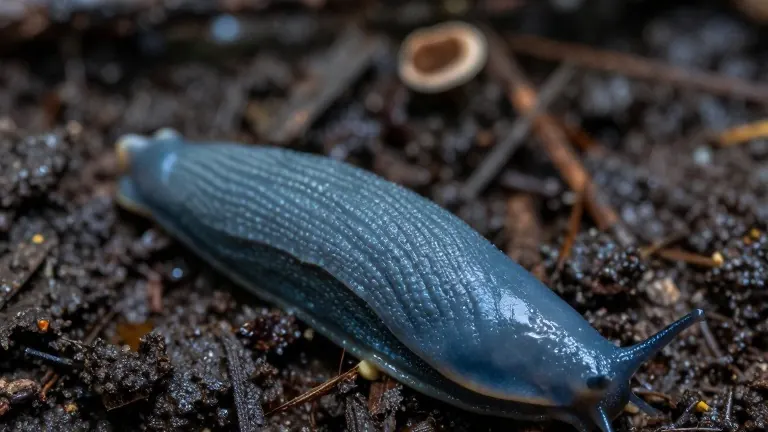
Lopez Island, San Juan County. Staff members at the Kwiaht Nature Center discovered a blue-gray taildropper slug on the island earlier this year. The finding marks the first recorded sighting of this species in the Puget Sound lowlands or islands since a single report from King County in the 19th century.
The slug, scientifically known as Prophysaon coeruleum, measures just over one inch in length. Russel Barsh, the Kwiaht director, noted that the discovery underscores the fact that invertebrate fauna on the islands remains poorly catalogued. The species is native to the Pacific Northwest but is uncommon throughout its range.
The blue-gray taildropper is listed as a Priority Species in Washington state and Red-listed in British Columbia. It is associated with mature forests that have developed mycorrhizal communities. Most modern sightings of the species have occurred in western Oregon and the southern tip of Vancouver Island. A few individuals have been seen in western Washington’s Mason and Lewis counties.
The slug was observed eating Russula xerampelina, a fungus that forms mycorrhizal relationships with Douglas firs in the region. Taildroppers are known to feed on various fungi as well as leafy greens. They live for only one year, emerging from overwintering eggs in the spring. Their activity peaks in autumn during mushroom season.
The species exhibits specific defensive and reproductive traits. Taildroppers can self-amputate the trailing end of their bodies when attacked by predators. Their blue color is suspected to be a form of Batesian mimicry, suggesting toxicity to deter predators. The slugs are hermaphroditic, possessing both male and female gonads, but must exchange sperm with another individual to deposit viable fertilized eggs.
The discovery draws attention to the mycophilic community in island woodlands. These animals feed on fungi and help spread fungal spores. While some are mammals like Douglas squirrels on Orcas Island and Townsend’s chipmunks on Lopez Island, most are invertebrates. These include flies, beetles, moths, other insects, slugs, and snails.
Fungus gnats in the family Mycetophilidae are a large group of mycophiles. Adults are tiny, measuring less than half an inch, and resemble midges or mosquitoes. Their larvae are found gnawing galleries in the flesh of mushrooms. A handful of specimens have been collected in the San Juan Islands but have not yet been identified to the species level.
Other mycophilic insects include predatory fungus gnats of the family Keroplatidae, such as the genus Macrocera. Their larvae eat fungus and spin webs to trap smaller invertebrates like springtails. Pleasing fungus beetles, specifically Triplax californica, also inhabit the islands. These beetles congregate in oyster mushrooms and Russula species and make a squeaky sound by moving their heads.
Springtails, or Collembola, are tiny hexapods that live in forest floor detritus. They eat algae and fungi, leaving behind a trail of spores. Fungal spores are hardy and pass unharmed through the digestive organs of various animals. These mycophiles disperse fungi fertilized with fecal matter, a process that supports the decay and recycling of nutrients in the forest ecosystem.
More News · Bellingham news · Report a business · Got a Story?